
Trustly at £10: review the integration, not just the logo
Trustly supplies bank-payment infrastructure used by participating merchants. The casino chooses which functions to expose, and local coverage affects what you see. A polished deposit button tells you little about withdrawal support. Start by opening payment information without committing funds, then inspect the supported currency and minimum.
The interface should distinguish the merchant from the payment service and make the requested amount legible. If the cashier says £10 but the hand-off changes the amount or currency, stop there. Our broader pay by bank guide covers the category without assuming one provider.
The bank login flow should have a clear return path
On mobile, the critical transition is from the provider’s bank selector into the bank’s authentication journey. Depending on the bank and market, that can involve an app redirect or a secure browser flow. Expect to review the payment and authorise it using the bank’s supported security method.
- Choose Trustly and enter £10 only after checking the cashier minimum.
- Select your own supported bank and read the consent information.
- Authenticate through the genuine bank journey and review recipient and currency.
- Approve once, then follow the return link to the cashier.
- Check payment history before repeating any apparently unfinished attempt.
A browser closing is not proof that payment failed. The return screen can break even when bank authorisation succeeds, especially when app switching interrupts the session.
Pay N Play style accounts: fewer forms, not zero checks
Some integrations use a Pay N Play style journey in which bank-linked information supports account creation or identification. The experience can feel shorter than completing a conventional registration form. That does not mean every Trustly casino uses this model, or that bank login replaces every legal check.
Review what information is shared, how the account is identified and how you regain access later. A returning player may see a different journey from a first-time depositor. Additional identity, address or source-of-funds evidence can still be requested, particularly before withdrawals.
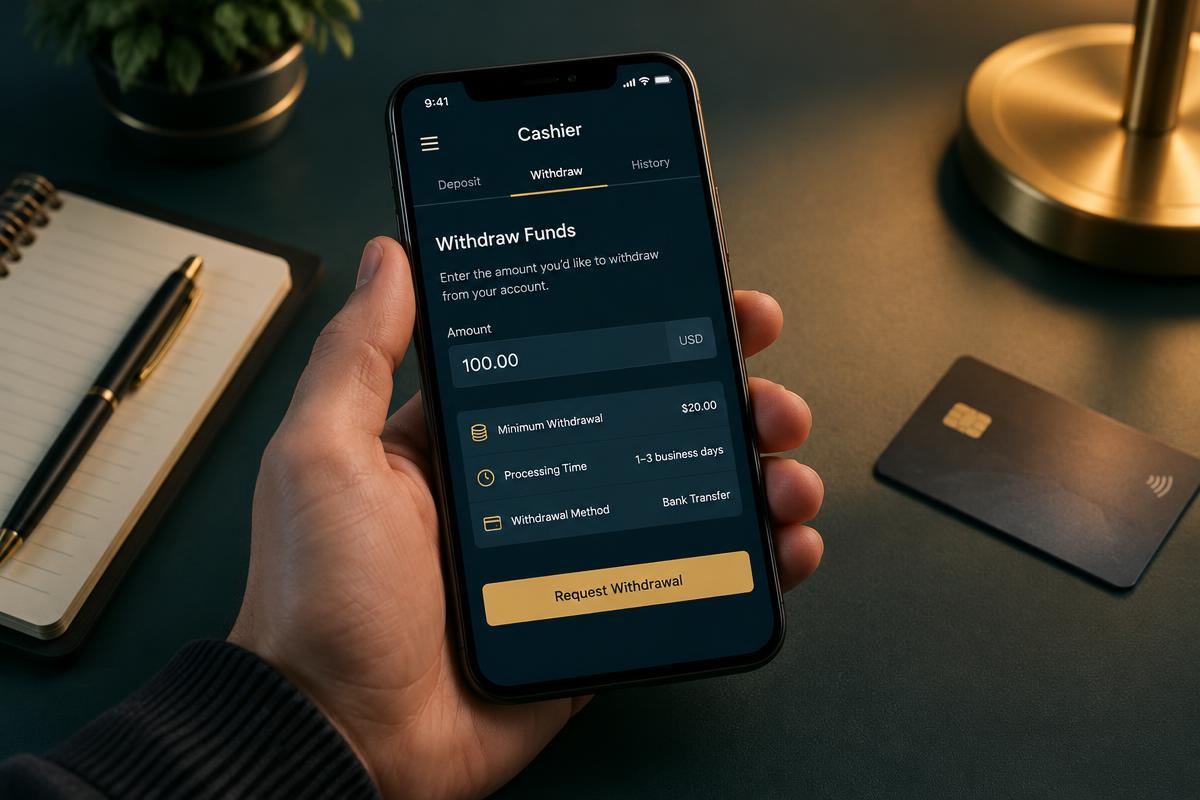
Withdrawal speed in numbers: isolate the operator delay
There are at least two clocks: the operator’s approval period and the bank delivery period. Adding a fast bank payout to an unresolved verification queue does not produce an instant withdrawal. Advertised timing should say when its clock starts and which banks or account types qualify.
| Payment option | Time to allow | Typical minimum | Fee check | Withdrawal |
|---|---|---|---|---|
| Trustly deposit | Often seconds or minutes | £10 if offered | Cashier, bank and FX terms | Not implied by deposit support |
| Trustly payout | After approval; bank timing varies | Often £20+ at operator level | Operator payout terms | Only where integrated |
| Manual bank payout | Often several banking days | May exceed £20 | Bank and intermediary terms | Commonly available separately |
In numbers, a £10 deposit floor and a £30 payout floor leave a £20 gap. Those figures describe access conditions, not a reason to deposit another £20.
A £10 mobile walkthrough catches three UX traps
For our 12 Nov 2026 editorial walkthrough, we used a screen-review scenario with a £10 payment, a pending return page and a £25 withdrawal threshold. We mapped the steps and limits to inspect rather than making a live transaction. The exercise does not claim measured Trustly load times or observed operator performance.
- At amount entry, verify that £10 remains GBP throughout the hand-off.
- After bank approval, distinguish a pending merchant status from a rejected bank payment.
- Before payout, open the withdrawal panel rather than inferring its limit from the deposit panel.
The most useful design feature is a recoverable status page. An animation alone cannot tell you whether the operator received a payment, and repeated tapping can create a second request.
The £10 bonus calculation belongs outside the login flow
A provider integration does not determine welcome-offer eligibility. The relevant numbers are the qualifying deposit, bonus amount, wagering base and expiry. A cashier may accept £10 while the offer requires £20. Method exclusions must be checked separately, even when the payment button appears beside a promotion.
| Illustrative condition | Figure | Result |
|---|---|---|
| Deposit accepted | £10 | Does not prove bonus eligibility |
| Bonus awarded | £10 | Assumes the deposit qualifies |
| Wagering on bonus only | 35x | £350 required turnover |
| Wagering on deposit plus bonus | 35x | £700 required turnover |
Enter the figures from the bonus terms. Offshore casinos commonly ask for 30× to 45×.
Illustrative expected-value calculation, not a forecast or guarantee. Actual results can vary widely. Do not increase your budget to complete wagering.
In numbers, the same £10 bonus can therefore generate twice the turnover under a different wagering base. Check game contributions and expiry too. Offshore offers commonly apply maximum bets around £5 during wagering, but that ceiling would expose half a £10 deposit on one spin.
Before requesting a Trustly payout, inspect the account state
Open the withdrawal view before playing and check that Trustly is actually offered there. The deposit tile and payout tile are separate integration choices. The account name should match your verified identity, and the operator may require the original funding route or another bank route where returns are unavailable.
- Confirm the eligible cash balance, excluding locked bonus funds.
- Read the withdrawal minimum and any maximum or daily limit.
- Complete outstanding verification through the operator’s secure upload channel.
- Check whether “processed” means approved, sent or received.
Trustly versus cards and manual transfers: the usability trade-off
Trustly suits a player comfortable approving payments through their bank and returning between apps. A manual transfer demands more copying and reference discipline. A card can feel more familiar, but its own authorisation, refund and withdrawal conditions still matter. Compare the complete payment cycle, not the smallest number of taps.
Advantages
- Bank selection can remove manual payee entry.
- The approval screen provides a useful amount check.
- Supported payouts can reduce manual banking administration.
Limitations
- Bank and country coverage are not universal.
- App switching can leave a confusing pending screen.
- Operator review can dominate withdrawal time.
See classic bank transfers for reference-based payments, or debit card deposits for card authorisation. Our comparison guide separates deposit support from withdrawal support. With a £10 budget, predictable limits and readable statuses matter more than marketing about speed.
Frequently asked questions
Is Trustly available for a £10 casino deposit?
Does Trustly always mean a Pay N Play account?
Are Trustly casino withdrawals instant?
What if Trustly redirects me but the balance stays unchanged?
Can I withdraw only £10 using Trustly?
Problems players reported, and how to avoid them
We collect publicly reported difficulties with the casinos listed here and add a practical fix. Not every complaint is justified, but the patterns are worth knowing before you deposit £10.
A player complained that verification was hard to complete and withdrawals stayed blocked until it was done.
Page update log
- PublishedPublished the method guide and minimum deposit checks.
- UpdatedExpanded withdrawal conditions and bonus examples.
- CheckedReviewed payment terminology, limits and verification guidance.

Marcus covers casino cashiers, e-wallets and bank payments. He reads the deposit pages, bonus terms and withdrawal rules of every casino we list and turns them into plain numbers for a £10 budget.